
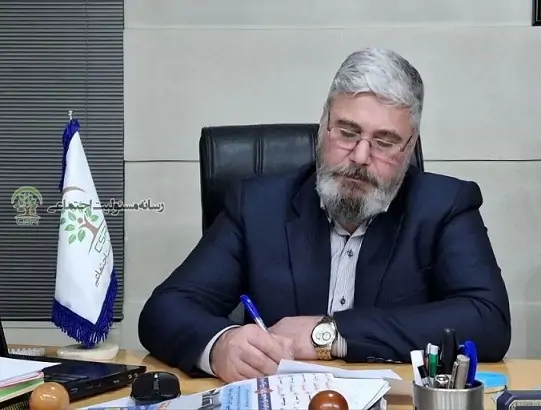
✍️Seyed Reza Jamshidi
Sustainability Journalist
Recent attacks on the country’s industrial infrastructure, particularly the steel sector, once again remind us that wars do not only target geographical borders and economic equations; they also directly and silently affect the environmental foundations of a nation. In this context, the steel industry, as one of the vital pillars of production and development, has become a focal point where any disruption triggers a chain of consequences that go far beyond economics.
Steel is an industry defined by heavy raw materials, complex processes, and high energy consumption. These characteristics make it environmentally sensitive even under normal conditions; yet in wartime, and under direct attacks, this structure can suddenly fall out of control and turn into a potential source of hazardous pollution.
When a steel facility is targeted, the issue is not limited to halted production or financial losses. A large volume of raw materials such as iron ore, coal, limestone, along with chemical compounds, industrial waste, and heavy metals, becomes exposed to uncontrolled release. These materials can quickly enter the air, soil, and water resources, disrupting natural cycles. In such circumstances, the environment effectively becomes a silent victim, with damages that are not immediate, but gradual and long-lasting.
Air pollution is one of the first consequences of such events. The burning of industrial materials and the release of particulate matter and toxic compounds significantly degrade air quality and threaten the health of nearby populations. At the same time, the infiltration of pollutants into water resources can contaminate drinking and agricultural water, creating impacts that extend far beyond the immediate area of attack. Soil is not spared either; the accumulation of heavy metals reduces agricultural productivity and challenges food security.
In this context, war-generated industrial waste becomes critically important. The remains of destroyed equipment, fuel tanks, oils, and chemical substances, if left unmanaged, gradually seep into natural resources and disrupt ecosystems. This is the point at which war transforms from a temporary crisis into a long-term environmental disaster.
Under such conditions, the concept of social responsibility is no longer a voluntary choice but an urgent necessity. Governments, industries, and even media each play a decisive role in managing this crisis. Maintaining minimum environmental standards during wartime, designing emergency protocols to contain pollution, and deploying specialized teams to control hazardous leaks are actions that cannot be postponed until after the crisis.
The steel industry itself, as a key actor in this field, must go beyond conventional requirements. Crisis preparedness, resilient safety systems, and scenario planning for potential destruction are now part of a broader, more advanced understanding of corporate social responsibility.
Alongside these efforts, the role of media in highlighting this often-overlooked crisis is critical. Accurate and well-documented reporting on the environmental consequences of such attacks can raise public awareness and prevent the issue from being sidelined. The environment is often overshadowed by immediate war news, while its consequences persist long after conflicts end.
Ultimately, what is happening today in the steel industry is not merely an industrial or economic issue. It reflects the deep interconnection between security, development, and the environment. The wounds inflicted on steel today, if not properly managed, may turn into lasting scars on nature and human life.
In such circumstances, attention to the environment is not a secondary consideration but a fundamental national and strategic responsibility to safeguard a future in which reconstruction and continuity of life depend on healthy natural resources.